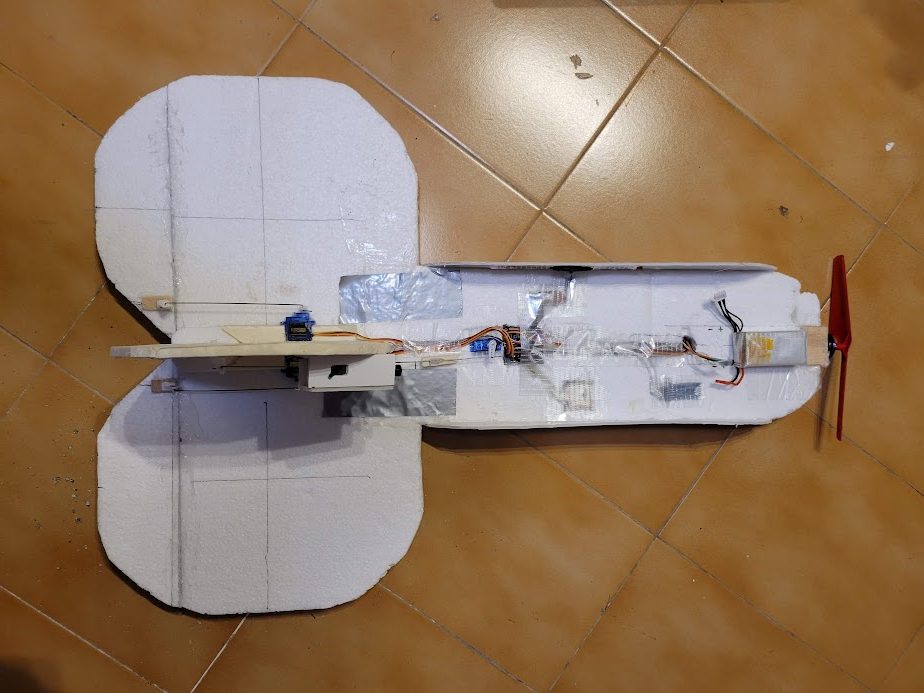
We’ve all seen this kind of doodle before – scratched into school desks, bathroom stalls, or the margins of a notebook. But I had a different idea: what if I could take that crude sketch and turn it into something both ingenious and airborne?
So, I set out to build a DIY RC airplane shaped like… well, you get the picture. Let’s get technical.
First Attempt
As the blueprint shows, I initially tried to keep the design under 250 grams to stay within the safe and legal weight limit:
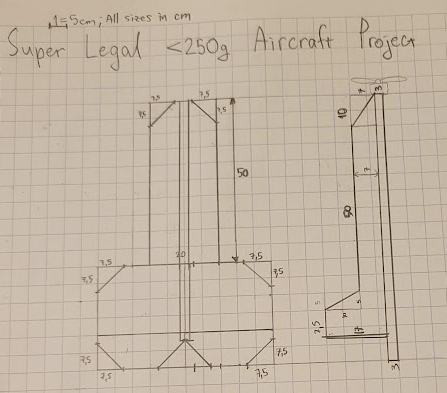
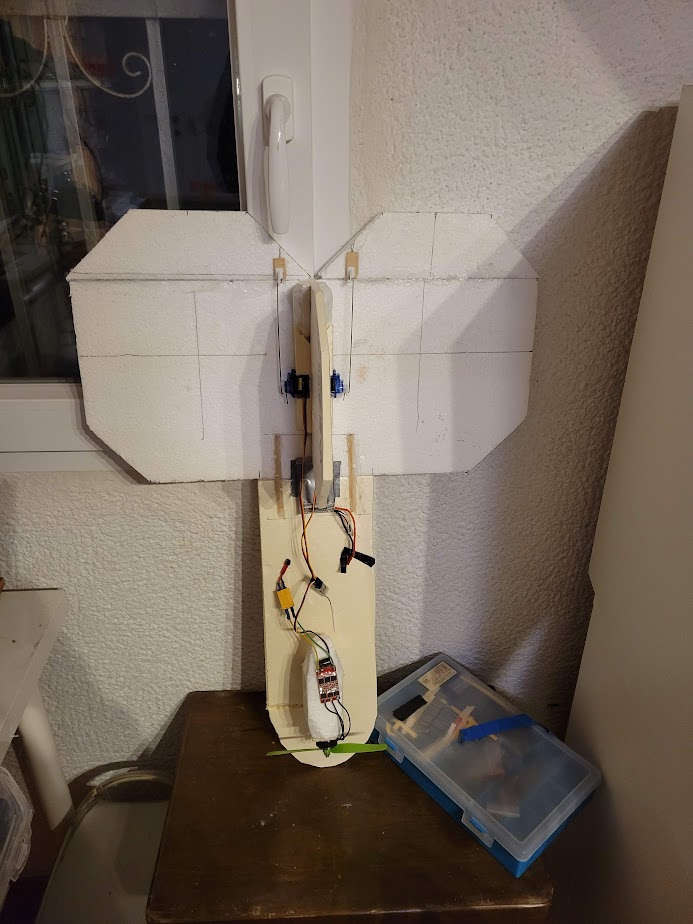
Unfortunately, it didn’t fly at all. Here’s why:
- The fuselage shape simply didn’t generate enough lift at front
- The components were placed too far back, pushing the center of gravity out of balance.
- The raised propeller design was counterproductive, creating excess pressure above the wing and canceling out lift.
Iteration two
I remade the fuselage using a thicker, lighter sheet of styrofoam. I carved out cavities for the electronics, which not only made the build sleeker but also improved aerodynamics.

This time, it flew! The downside: it was twitchy, hard to control, and underpowered.
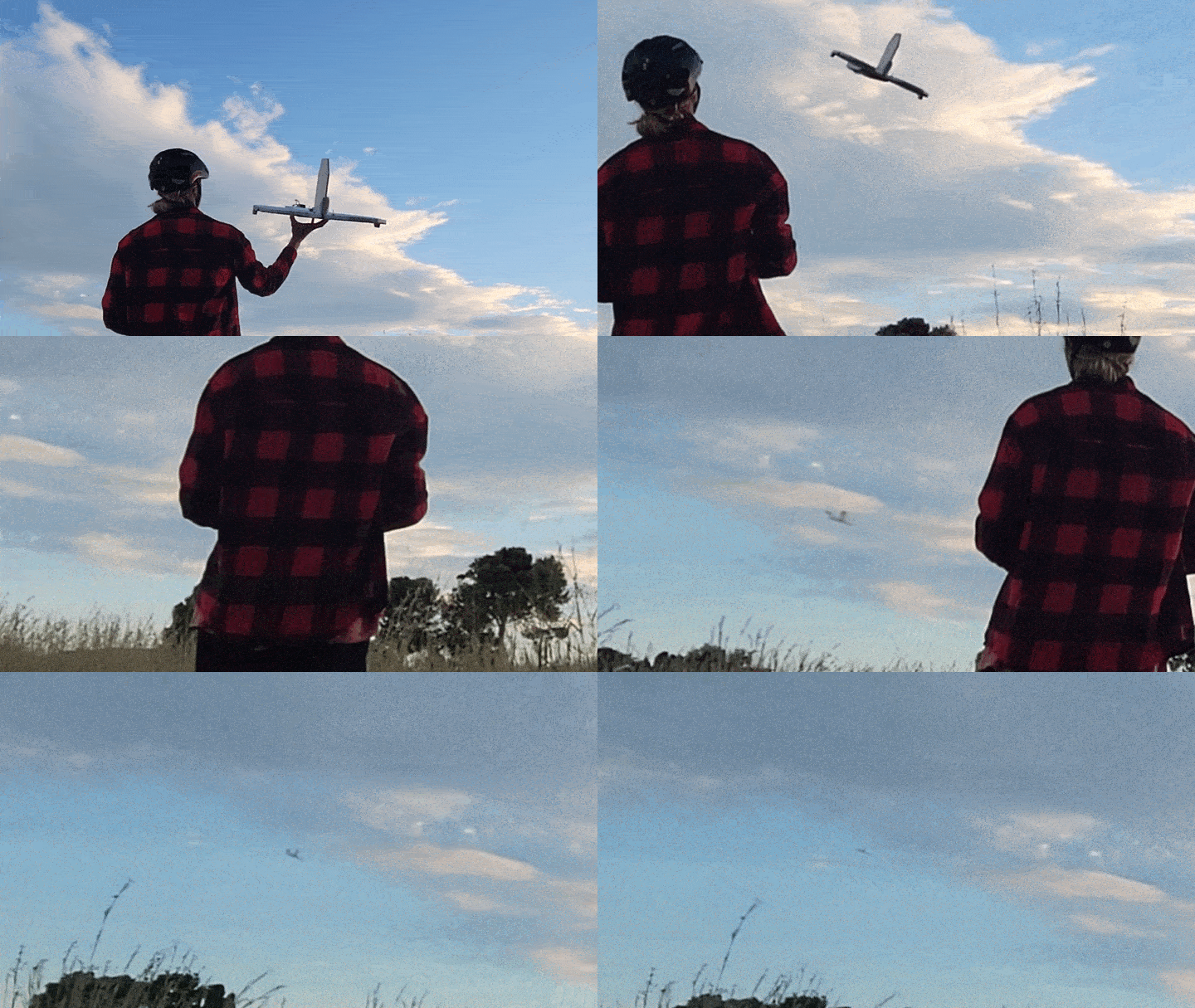
Upgrades
To fix the described issues, I:
- Swapped in a stronger propeller for more thrust.
- Added a flight controller for stability (I went with Ardupilot – that’s what I always use).
- Tossed in a GPS module, mostly for fun.
- Added a rudder servo (didn’t end up using it though).
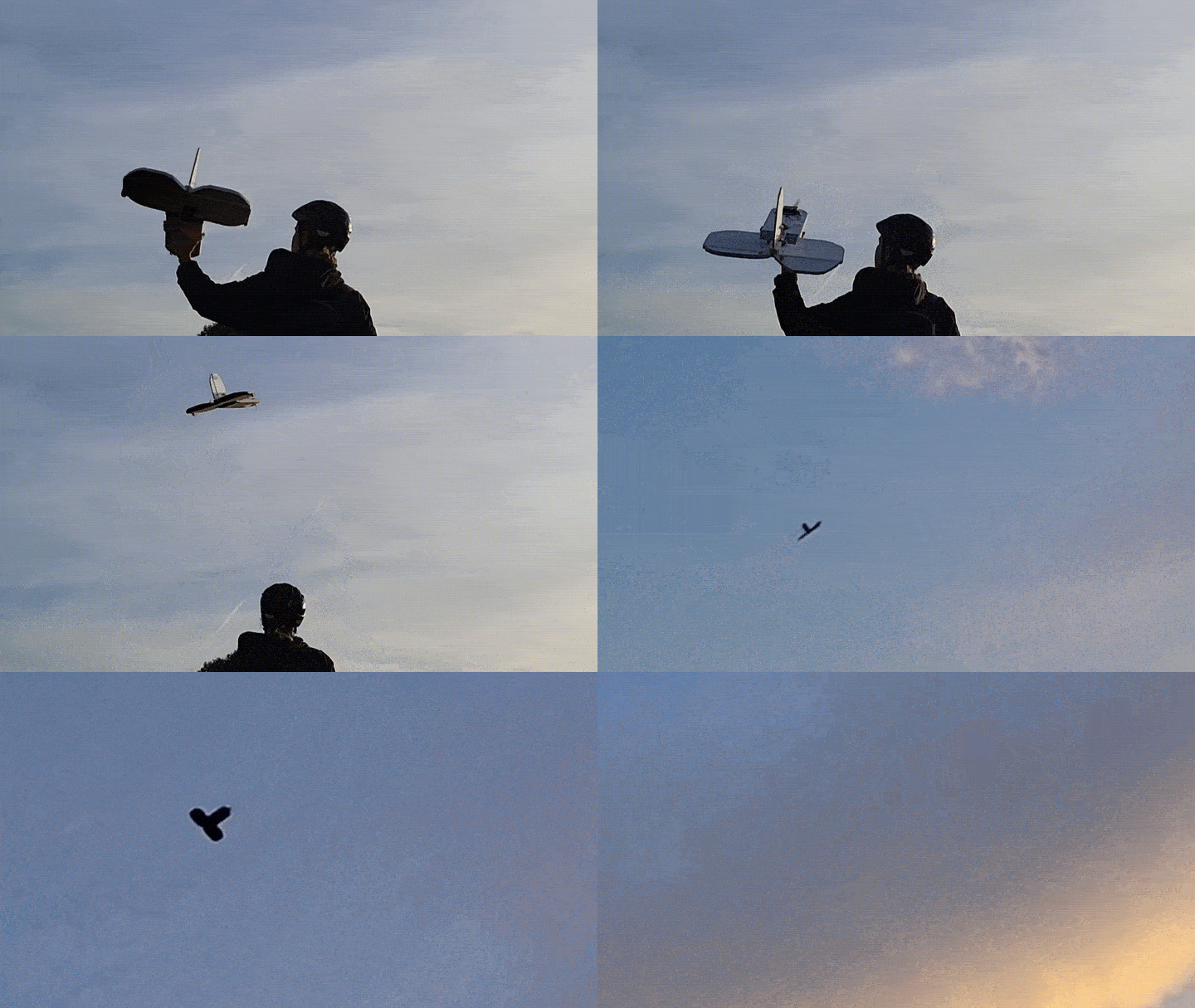
Then disaster struck. A crash.

But nothing a little tape and hot glue couldn’t fix.
The First-Person-View experience
After repairs, I installed an FPV camera and transmitter. That changed everything. Flying it through goggles turned the project from a quirky experiment into a genuinely thrilling experience.
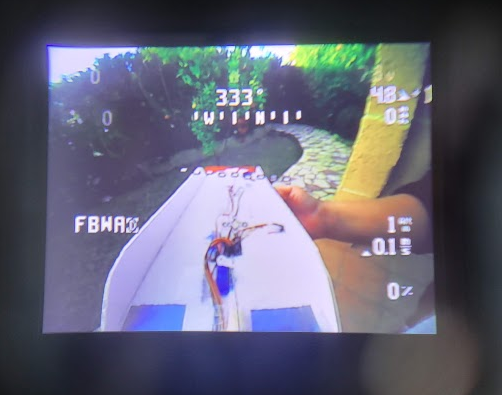
Here’s a quick video showing the pilot’s-eye view:
Final Remarks
My technical part is done here – let’s leave the comedy to GPT-5. Here’s what it came up with, and honestly, it left me rolling on the floor with laughter for a few solid minutes:)
- “Sure, it’s not the most aerodynamic design in history… but it still manages to keep spirits up.”
- “Turns out, with the right thrust, even the most questionable designs can stay aloft.”
- “In the end, it’s less about lift‑to‑drag ratio and more about lift‑to‑laugh ratio.”

 Artemiy's DIY blog
Leave a comment